How To Check Your Tyre Pressure Correctly: A Complete Driver’s Guide
Your tyres are one of the most important safety components of your vehicle. They are the only part of your car that maintains direct contact with the road, which means keeping them correctly inflated is essential for safe handling, braking performance and fuel efficiency.
However, many drivers rarely check their tyre pressure or are unsure what the correct pressure should be.
Driving with incorrect tyre pressure can lead to:
- Reduced grip and handling
- Increased braking distances
- Faster tyre wear
- Higher fuel consumption
- Increased risk of tyre damage or failure
The good news is that checking your tyre pressure is quick and simple when you know what to do.
At Mobile Tyres Near Me, we help drivers across London and surrounding areas stay safe with professional mobile tyre fitting, tyre inspections, puncture repairs and emergency tyre services. Whether you need advice or urgent assistance, our experienced technicians come directly to your home, workplace or roadside location.
Why Is Correct Tyre Pressure Important?
Maintaining the correct tyre pressure is not just about protecting your tyres. It directly affects how your vehicle performs.
1. Improves Driving Safety
Underinflated tyres have more contact with the road, which creates extra heat and reduces handling ability.
This can affect:
- Steering response
- Cornering stability
- Emergency braking performance
Correct pressure helps your tyres maintain their designed grip.
2. Improves Fuel Efficiency
When tyres are underinflated, your engine has to work harder because of increased rolling resistance.
According to tyre manufacturers, maintaining correct tyre pressure can help improve fuel economy and reduce unnecessary fuel costs.
3. Extends Tyre Lifespan
Incorrect tyre pressure causes uneven wear.
Underinflated tyres often wear faster on:
- Both outer edges of the tread
Overinflated tyres often wear faster in:
- The centre of the tread
Keeping the correct pressure helps your tyres wear evenly and last longer.
How Often Should You Check Your Tyre Pressure?
Ideally, you should check your tyre pressure:
- At least once every month
- Before long journeys
- Before motorway driving
- Before carrying heavy loads
- Whenever your vehicle displays a tyre pressure warning light
It only takes a few minutes but can prevent expensive tyre damage and unexpected breakdowns.
How To Find The Correct Tyre Pressure For Your Car
Before checking your tyres, you need to know the recommended pressure.
The correct tyre pressure can usually be found:
1. Inside Your Driver’s Door Frame
Many vehicles have a sticker showing:
- Recommended PSI
- Recommended bar pressure
- Front and rear tyre settings
2. In Your Vehicle Handbook
Your owner’s manual will provide the manufacturer’s recommended tyre pressures.
3. Online Vehicle Information
Some manufacturers provide tyre pressure information online based on:
- Vehicle model
- Engine type
- Tyre size
- Load requirements
Always Check Tyre Pressure When Tyres Are Cold
For an accurate reading, check your tyres when they are cold.
This means:
- The car has been parked for several hours, or
- You have driven less than around 3 km
Why?
When tyres heat up during driving, the air inside expands and increases the pressure reading. Checking warm tyres can give an inaccurate result.
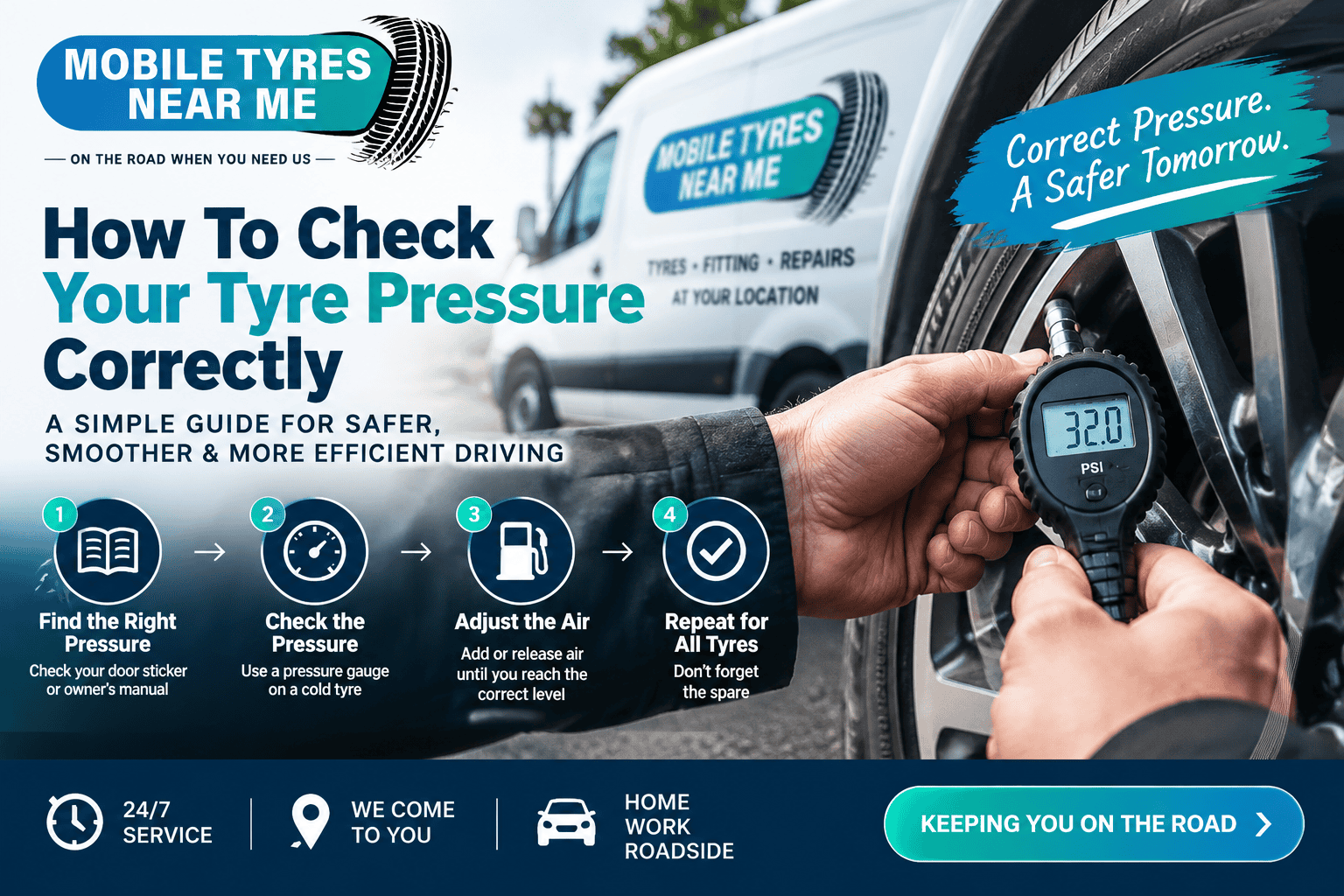
Step-by-Step Guide: How To Check Your Tyre Pressure
You only need:
✓ A tyre pressure gauge
✓ An air pump or compressor
✓ Your recommended tyre pressure information
Follow these simple steps.
Step 1: Remove The Valve Cap
Locate the tyre valve on each wheel.
Remove the small plastic valve cap and keep it somewhere safe.
The valve is where you will measure and adjust the air pressure.
Step 2: Use A Tyre Pressure Gauge
Place the pressure gauge firmly onto the valve stem.
Make sure it creates a good seal.
The gauge will show your current tyre pressure.
Compare this reading with your vehicle manufacturer’s recommended pressure.
Step 3: Add Air If The Pressure Is Too Low
If your tyre pressure is below the recommended level:
- Attach an air pump to the valve.
- Add air gradually.
- Check the pressure again.
- Stop once you reach the correct PSI or bar.
Avoid overinflating your tyres because this can affect handling and tyre wear.
Step 4: Release Air If The Pressure Is Too High
If your tyre pressure is above the recommended level:
- Press the small pin inside the valve carefully.
- Release small amounts of air.
- Recheck using the pressure gauge.
Continue until the correct pressure is reached.
Step 5: Replace The Valve Cap
Once the pressure is correct:
- Replace the valve cap securely.
- Repeat the process for all four tyres.
- Remember to check your spare tyre if your vehicle has one.
What Should My Tyre Pressure Be?
There is no universal tyre pressure because it depends on:
- Vehicle make and model
- Tyre size
- Vehicle weight
- Number of passengers
- Load carried
Common passenger vehicle pressures are often between:
30 PSI and 35 PSI
However, always follow your vehicle manufacturer’s recommendation.
Signs Your Tyre Pressure May Be Incorrect
Your vehicle may be telling you that your tyre pressure needs attention.
Common warning signs include:
1. Tyre Pressure Warning Light
Modern vehicles have TPMS (Tyre Pressure Monitoring Systems).
If the warning light appears, check your tyre pressures as soon as possible.
2. Steering Feels Different
Incorrect tyre pressure may cause:
- Heavy steering
- Poor cornering
- Reduced stability
3. Vehicle Pulls To One Side
Uneven tyre pressure can affect vehicle balance and handling.
4. Increased Fuel Consumption
If your fuel economy suddenly drops, incorrect tyre pressure could be one possible cause.
5. Visible Tyre Problems
Inspect your tyres for:
- Bulges
- Cracks
- Uneven wear
- Damage
- Frequent air loss
What Happens If You Drive With Low Tyre Pressure?
Driving with underinflated tyres can create several risks.
These include:
Increased Heat Build-Up
Low pressure causes more tyre flexing, creating additional heat that can damage the tyre structure.
Longer Braking Distances
Reduced tyre contact performance can affect stopping ability.
Higher Risk of Tyre Failure
Severely damaged or underinflated tyres may fail unexpectedly, especially at motorway speeds.
Can Mobile Tyres Near Me Help Check Your Tyres?
Yes.
If you are unsure whether your tyres are safe, Mobile Tyres Near Me provides professional mobile tyre services across London and surrounding areas.
Our technicians can help with:
- Tyre inspections
- Mobile tyre fitting
- Emergency tyre replacement
- Puncture repairs
- TPMS sensor replacement
- Commercial vehicle tyre services
Instead of visiting a garage and waiting, our mobile tyre experts come directly to you.
Keep Your Tyres Properly Inflated For Safer Driving
Checking your tyre pressure regularly is one of the easiest ways to improve safety, reduce running costs and extend tyre life.
A few minutes checking your tyres could prevent:
- Unexpected breakdowns
- Expensive damage
- Unsafe driving conditions
If you need professional tyre assistance, Mobile Tyres Near Me provides reliable mobile tyre fitting and emergency tyre services across London.
Contact Mobile Tyres Near Me today and keep your vehicle safe on the road.
Frequently Asked Questions
How often should I check my tyre pressure?
You should check your tyre pressure at least once a month and before long journeys.
Should I check tyre pressure when tyres are hot?
No. Tyre pressure should be checked when tyres are cold because heat increases pressure readings.
What PSI should my car tyres be?
The correct PSI depends on your vehicle. Check the driver’s door sticker or owner’s manual for the recommended pressure.
Can low tyre pressure damage tyres?
Yes. Driving with low tyre pressure can cause overheating, uneven wear and increased risk of tyre failure.
Does correct tyre pressure save fuel?
Yes. Correctly inflated tyres reduce rolling resistance, helping your vehicle operate more efficiently.
Can I check tyre pressure myself?
Yes. You only need a tyre pressure gauge and access to an air pump. The process takes only a few minutes.